Where Wasps Commonly Build Nests Around Ohio Homes
When homeowners notice increased wasp activity around their property, that usually means there is a nest nearby. Wasps are highly resourceful insects that look for sheltered, protected spaces to establish colonies. Unfortunately, many residential properties provide the perfect environment.
If you have noticed frequent wasp sightings around your home, it may be time to contact a professional wasp exterminator.
At Restoration Pest Management, we help Ohio homeowners identify nesting activity, safely get rid of wasps, and protect their properties from recurring infestations. Knowing where wasps commonly build nests is one of the first steps toward reducing the risk of dangerous infestation around your home and yard.
Why Wasps Choose Residential Properties
Wasps seek out locations that provide protection from weather, access to food sources, and safe places to build their nests. Ohio homes offer countless nesting opportunities in areas such as roof overhangs, decks, sheds, garages, landscaping features, and wall voids.
Many wasp species also prefer areas with limited human activity during the early stages of nest development. By the time homeowners notice increased activity, the colony may already be well established.
Professional pest control services can help identify hidden nesting areas and provide safe wasp removal before the infestation grows larger.
Roof Eaves and Overhangs
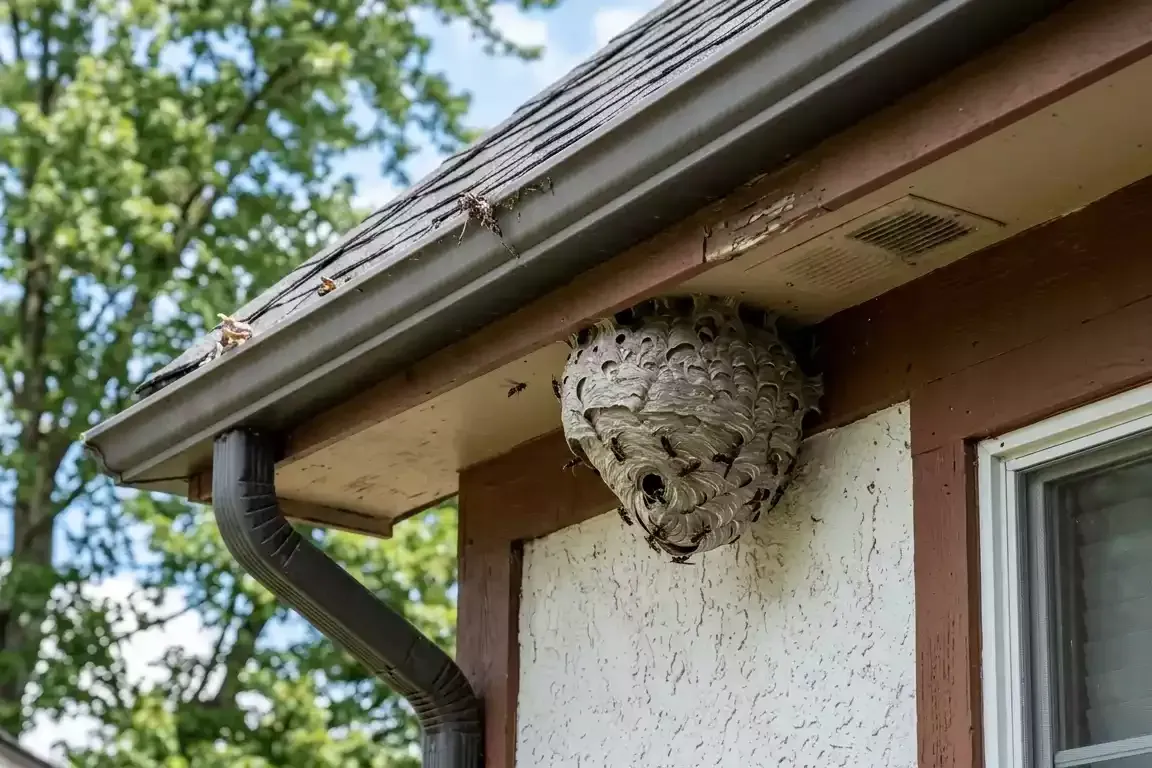
One of the most common places for wasps to build nests is beneath roof eaves and overhangs. These areas provide shelter from rain and direct sunlight while remaining elevated and protected from predators.
Paper wasps frequently attach their umbrella-shaped nests to soffits, porch ceilings, gutters, and exterior trim. Because these nests are often close to entryways and outdoor living spaces, they can quickly become a safety concern for homeowners and guests.
If you notice wasps flying in and out of these areas regularly, avoid disturbing the nest and contact a wasp exterminator for professional assistance.
Decks, Patios, and Outdoor Structures
Wasps are also attracted to decks, pergolas, gazebos, and covered patios. The undersides of these structures offer dark, protected spaces that are ideal for nesting.
Unfortunately, these locations place wasps in close proximity to outdoor gatherings, cookouts, and family activities. Wasps are especially attracted to sugary drinks, food scraps, and garbage commonly found around patios and outdoor kitchens.
Prompt wasp removal can help homeowners reclaim outdoor spaces and reduce the risk of exposing their friends and family to painful stings.
Attics and Wall Voids
Some wasp species seek out hidden indoor spaces such as attics, wall voids, and crawl spaces. Small gaps around vents, siding, roofing materials, and utility penetrations can allow wasps to enter and establish nests inside the home.
These infestations may initially go unnoticed until homeowners hear buzzing sounds in the walls or discover wasps indoors. In some cases, large colonies can cause damage to insulation, drywall, or wood components.
Professional pest control technicians can locate hidden nests and safely get rid of wasps without causing additional problems inside the home.
Sheds, Garages, and Storage Areas
Detached structures like sheds and garages are also common nesting sites. Wasps often build nests in corners, rafters, shelving units, or behind stored items where disturbances are minimal.
Because homeowners may not access these spaces daily, nests can grow significantly before they are discovered. This can create hazardous situations when retrieving tools, lawn equipment, or seasonal decorations.
Regular inspections of storage areas can help identify nests early before they become more aggressive.
Underground Nests in Yards
Yellow jackets are particularly known for building underground nests in abandoned rodent burrows, landscaping voids, and hollow areas beneath rocks or retaining walls.
These nests can be especially dangerous because they are difficult to spot until the colony is disturbed. Activities like mowing the lawn, gardening, or children playing outside can accidentally trigger aggressive swarming behavior.
If you suspect underground wasp activity, avoid the area and contact a professional wasp exterminator immediately.
Trees, Shrubs, and Landscaping Features
Wasps may also establish nests in trees, shrubs, dense bushes, and decorative landscaping features. These areas provide natural camouflage and protection from predators.
Homeowners often encounter these nests while trimming bushes, pulling weeds, or performing yard maintenance. Because many nests remain hidden until disturbed, landscaping work can quickly become dangerous.
Routine property inspections and professional pest control treatments can help reduce nesting activity around heavily landscaped areas.
Why Professional Wasp Removal Matters
Trying to get rid of wasps without professional help can be risky. Many species aggressively defend their nests when threatened, and disturbing a colony without proper treatment methods can result in multiple stings.
Professional pest control technicians have the tools, safety equipment, and experience necessary to identify the species, locate hidden nests, and eliminate infestations safely. They can also help prevent future nesting by identifying entry points and environmental conditions that attract wasps.
Contact Restoration Pest Management for Wasp Removal
If you are seeing increased wasp activity around your home, don’t wait for the problem to get worse. The team at Restoration Pest Management provides professional wasp removal and pest control services designed to help homeowners safely get rid of wasps and prevent future infestations.
If you need help with wasp removal or want to take proactive steps to prevent future infestations, contact Restoration Pest Management today. Our experienced pest control team can inspect your property, identify nesting areas, and help you safely get rid of wasps before the problem becomes more dangerous.